FOR ACTIVITY TEAMS, FAMILIES & COMMUNITY CENTERS
One Photo.
One Story.
A small conversation can give a family memory a place to live. Start with one photograph, a familiar object, or a place someone remembers.
A SUGGESTED 20-MINUTE CONVERSATION
Let the story lead.
- Choose a photo, an object, or a remembered scene.
- Ask who, where, about when, and what story belongs with it.
- Keep a useful note. Share only what you choose.
Passing, listening, and taking the page home are all welcome.
READY FOR YOUR ACTIVITY TEAM
A beginning
you can make your own.
Use the first page as a facilitator guide. Offer the second page to participants for writing or drawing. Adjust the pace and format for your group.
Bring: a pen, a printed participant page, and an optional photo or familiar object. A remembered scene works, too.
Invite a small beginning
Let each person choose what to describe. Explain that sharing and writing are optional. Listening is welcome.
Let the story lead
Ask one prompt at a time: Who is here? Where are we? About when was this? What story belongs with it? Allow pauses.
Keep a useful note
Offer space to write or draw. Ask before helping someone record their words. Participants keep their own sheets.
Choose one next step
Invite participants to tell a trusted person about the story. Later, in private, they can note where the original and a checked backup are kept.
A COMFORTABLE CONVERSATION
There is room
to simply listen.
This is an optional social activity. Adapt it to the people in front of you and follow your community's usual guidance.
- Offer a remembered scene or an object if a photo feels too personal.
- Let dates be approximate. Avoid testing or correcting someone's memories.
- Ask before recording, photographing, or sharing a story.
- Keep passwords, account access, financial details, and private records outside the group.
- Participants can keep their sheets, continue with family, or leave a question blank.
A PAGE TO KEEP
Who or what is in this memory?Where and about when was it?What story would I like to keep?One person I might share this with.PRINT IT FOR YOUR COMMUNITY
Two pages.
A useful place to start.
The printable includes the facilitator outline, a participant page with large text and writing space, and a link back to this free resource.
You may print and share complete, unmodified copies of this free activity at no charge for personal use or within your senior center or senior living community. Keep the author credit and resource link.
Get the free PDF ↓The activity is self-contained. No book purchase is needed.
OPTIONAL READING FOR FAMILIES
Keep the conversation going.
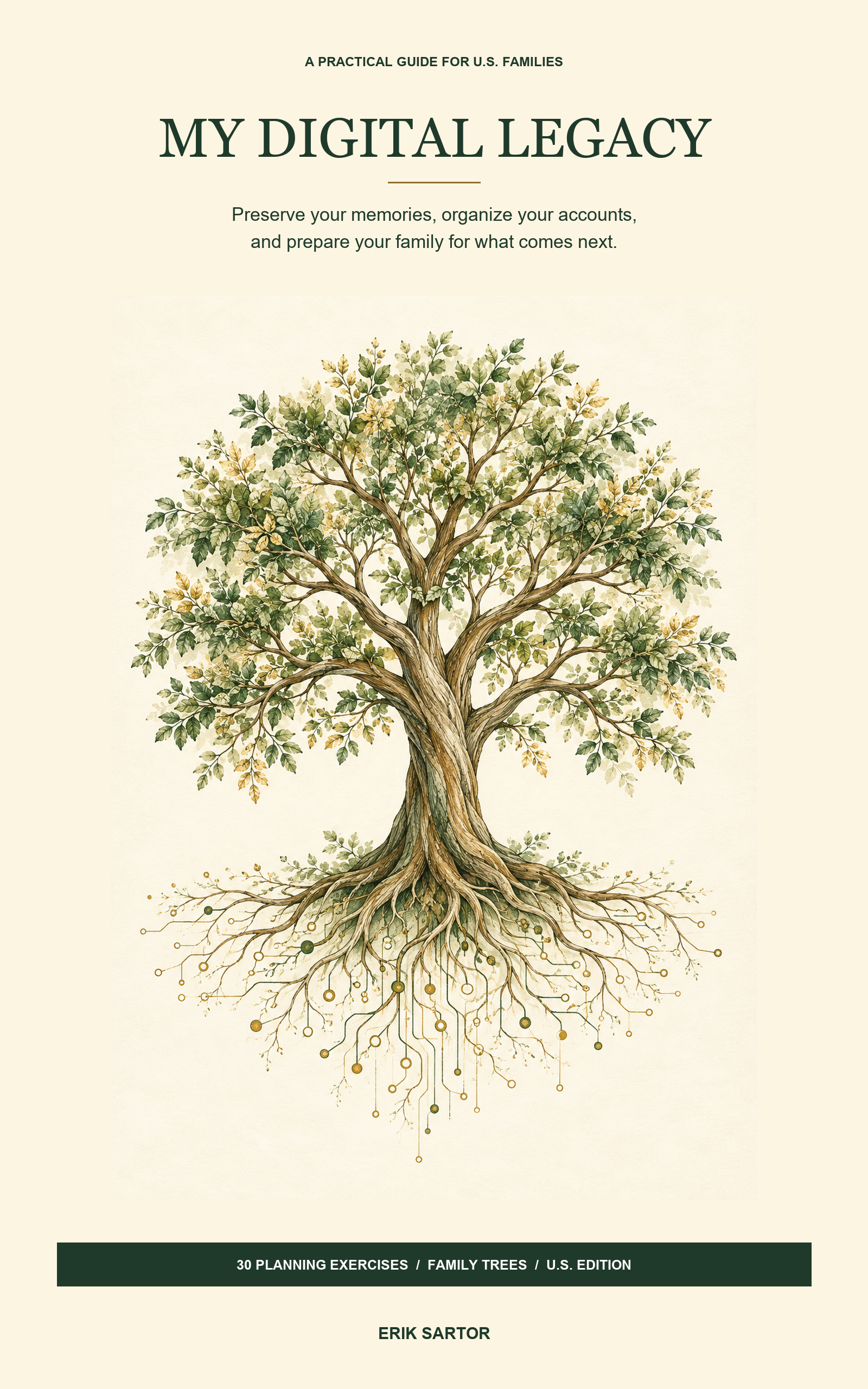
My Digital Legacy by Erik Sartor is an English-language guide for U.S. families. It brings together memory preservation, account maps, family relationship diagrams, and questions to discuss with qualified estate-planning professionals.
The Kindle edition includes 30 guided exercises. Keep responses in a separate private notebook or document. U.S. list price $4.99; check current regional price and availability on Amazon.
View the Kindle guide on Amazon ↗Explore the free family first-step finder →
Is this a therapy program or legal-planning workshop?
This is a photo-and-story conversation activity. It does not provide therapy, assess memory, create legal documents, or replace professional advice. Staff decide whether and how it fits their community.
Do residents need a phone, passwords, or an online account?
No. A photograph, an object, or a remembered scene is enough. The printed sheet can be completed privately, with consent-based assistance, or simply taken home.
May we include the activity in our newsletter?
You may link to this page or share the complete, unmodified free PDF at no charge with author credit and the resource link. Please avoid publishing participants' stories or images without their permission.